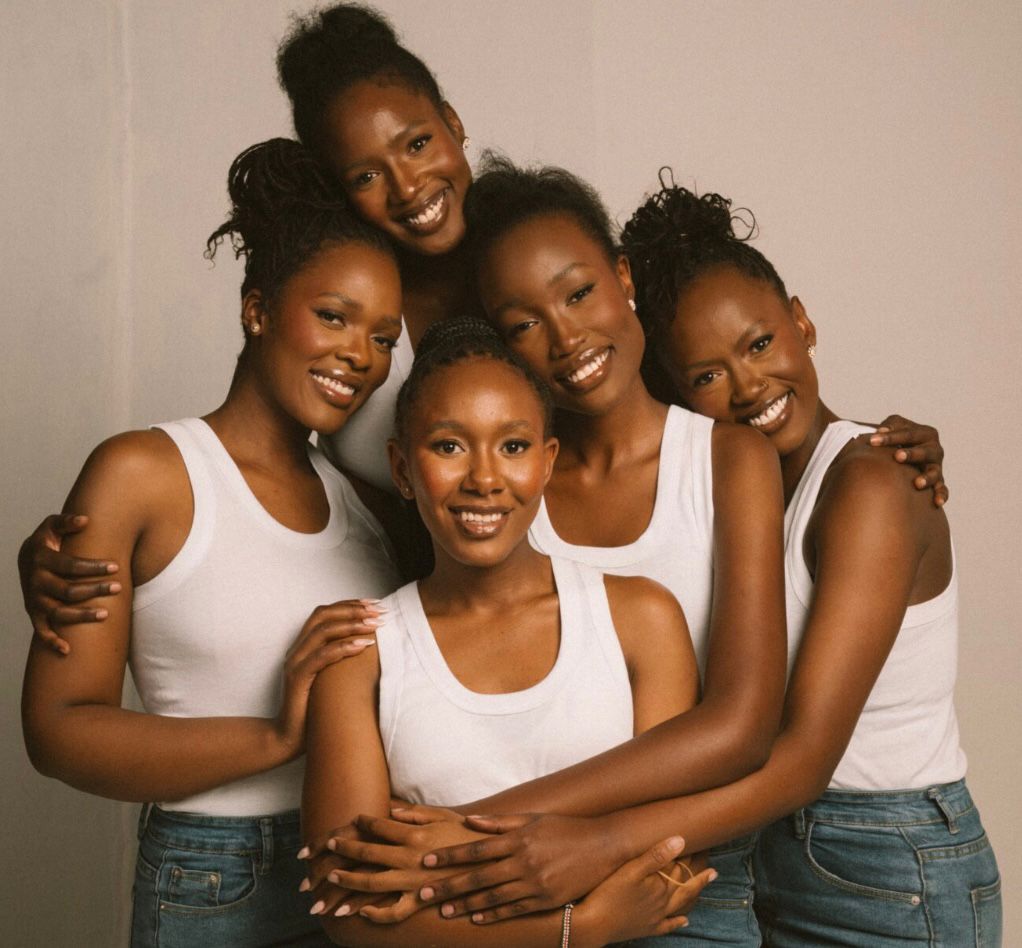
Stepping into Free Me, directed by Mugambi Nthiga and produced by Gathoni Kimuyu, is like entering Gathoni’s life itself. Raw, unflinching, and impossibly intimate. From the first moment, the audience is swept into a journey that spans childhood, love, heartbreak, and the harrowing reality of gender-based violence, all filtered through moments of tenderness, humor, and unvarnished truth. The production design is striking in its simplicity: lighting punctuates every emotional turn, strobes jolt the audience into the chaos of violence, and seamless scene transitions make the story feel alive, breathing, and continuous. Sound, subtle yet purposeful, underlines each shift in emotion, gliding with the narrative as effortlessly as the performers glide across the stage.
The cast of five extraordinary actresses each embodies a different stage of Gathoni’s life, creating a living tapestry of growth, fear, and courage. Renee Gichuki, as the youngest Gathoni, radiates innocence, curiosity, and trepidation. Watching her navigate the anxieties of a strict household, forbidden desires, and the first hints of independence, the audience feels the sharp edges of teenage fear and the fragile optimism of youth. Nungari Kiore commands the stage with breathtaking versatility, shifting effortlessly between Gathoni, her father, a puppy buyer, each portrayal precise and deeply felt. Rono, portraying the forbidden Njenga, possesses a voice both haunting and tender, guiding us through the story like a moral compass of longing and restraint. Ellah Maina’s performance is heavy and haunting, capturing the tension of a woman caught in the invisible chains of love and abuse. A portrayal that mirrors the real-life struggles of countless women who take years to find the strength to leave. Gathoni Mutua stands at the pinnacle of this journey, exuding resilience, defiance, and the unshakable will to survive. Every glance, every gesture, every pause communicates the inner life of a woman reclaiming herself. Tobit Tom, performing as Prince behind a mask, is terrifying in his charisma, a chilling embodiment of fragile masculinity and violent power. His presence a pulse of tension in the room. Mugambi Nthiga, as a man directing the violent and deeply personal story of a woman, navigated Gathoni’s journey with remarkable sensitivity and insight. He balanced the harsh realities of violence with moments of pause, giving the audience space to process and breathe. His direction elevated each performance, honoring the story’s truth while maintaining a graceful, powerful, and emotionally resonant rhythm throughout the play.
The storytelling is masterful. From Gathoni’s childhood, where fear and curiosity intertwine in the narrow lanes of her home and the forbidden interactions with Njenga, to the complex web of her marriage and the violence that followed, the narrative moves with the precision of memory and the intimacy of confession. Humor is never misplaced, nostalgia never indulgent, and triggers never gratuitous. They are all deliberate, guiding us into empathy and understanding. Watching the play feels like sitting on a bus that tours the city of Gathoni’s life; you are both a passenger and a witness, feeling the bumps, laughter, heartbreak, and tremors of fear that mark her path.
Beyond the individual story, Free me, casts a powerful light on the societal systems that allow violence to persist in silence. It confronts the audience with the realities of fragile masculinity, cultural expectations, and the pervasive shame that keeps women in abusive situations. The play refuses pity; it demands recognition, empathy, and action. It is a clarion call, showing that stories of gender-based violence are not abstract. They live and breathe in the room with us, in the faces of the audience, and in the mirrored reflection of society.
As the final scene dissolved into the quiet of the theater, Gathoni Mutua’s words lingered in the air: “Some of the women who have been in these abusive relationships are here, some of the men who have abused their partners in these relationships are also here.” Chills ran down my spine. The statement was not just a reflection; it was a confrontation. It reminded every person in that space that this was not simply a performance. It is a mirror reflecting the society that sits in the theater, the realities that are often hidden in plain sight, and the urgent need for awareness, empathy, and change.
Leaving the theater, I was left with an aching clarity: Free Me is more than art; it is activism, healing, and a profound testament to the human spirit.
The rise of gender-based violence in Kenya is more than alarming; it is a mirror of a society grappling with fragile masculinity, unchecked egos, and cultural norms that silence women. Amid the 16 days of digital activism, the urgency is clear: change requires confronting these truths, amplifying women’s voices, and reshaping how we teach, protect, and respect one another. Until we address the roots of violence, the cycle will continue, leaving scars not just on individuals, but on the fabric of society itself.

Leave a comment