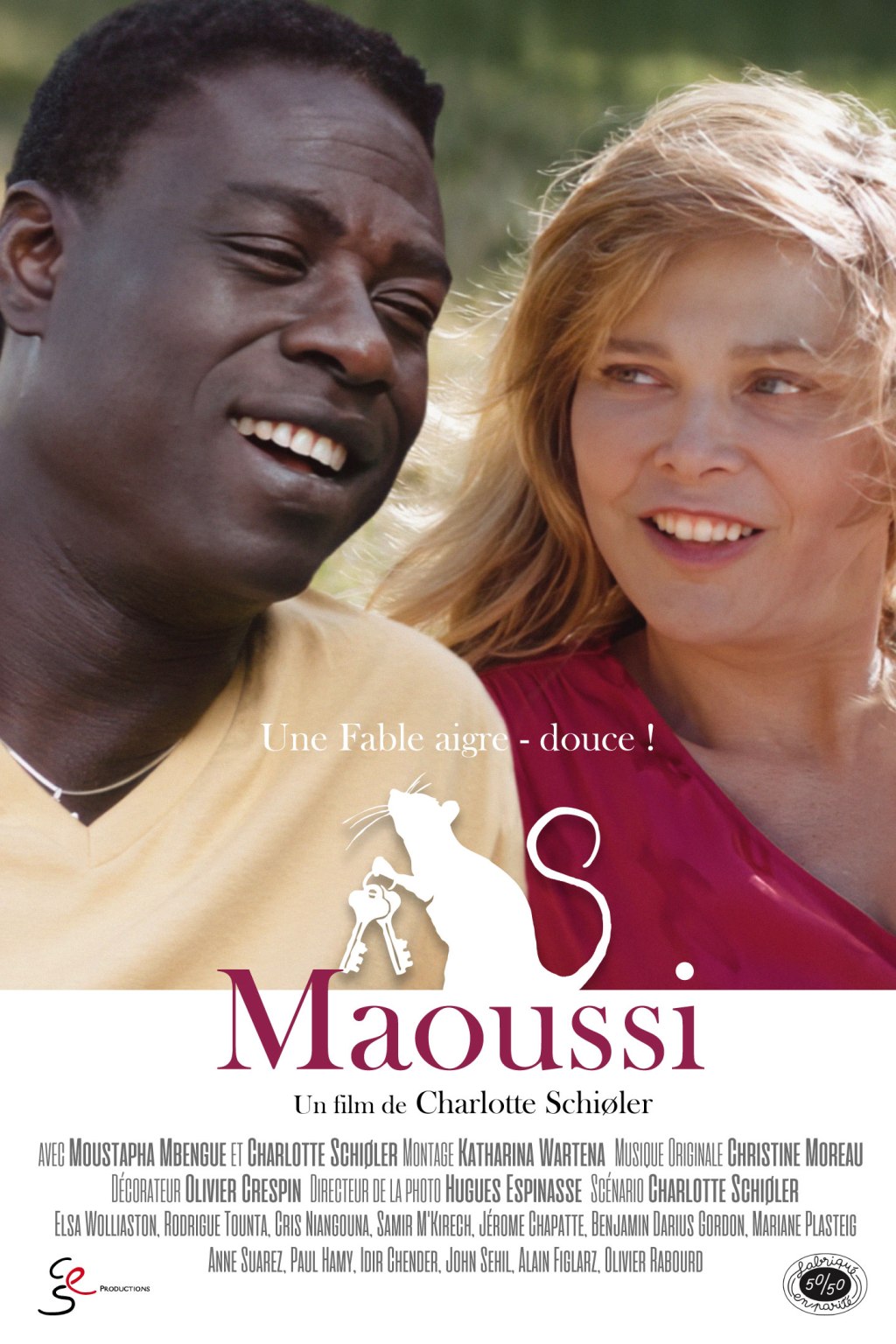
Some films unfold like poetry—fast yet thoughtful, simple yet layered, holding you in an intimate space that lingers long after the screen fades to black. Maoussi is that kind of film. It is deeply French in its pacing and atmosphere—quick and sharp, but with just enough stillness in the right moments to let you feel. It does not overwhelm you with explanations. Instead, it lets the silences, the glances, and the clever camera work tell as much of the story as the dialogue does. I think this is the best film I have watched so far this year!
At its heart, Maoussi is about love, survival, and the strange ways human connections are formed. Babette is Danish but has moved to France, settling into a cozy little apartment filled with modern, almost impersonal touches of American technology—a kettle that works by touch buttons and switches off automatically, sleek appliances that suggest a life carefully curated for solitude. She unwinds by watching Korean dramas, losing herself in stories that, perhaps, feel simpler than her own reality. Babette reads books like How to Cry and Laugh Yourself to Happiness, suggesting she perhaps seeks emotional balance but struggles to understand her feelings. Her book choices reveal a quiet longing for self-improvement and healing, as if emotions can be learned rather than fully experienced.She is a dancer, passionate yet measured, and it is her choreographer, Nora—direct, and effortlessly funny—who convinces her to take in Edo, but only for two weeks.
Edo played by Moustapha Mbengue is a Congolese refugee, a man running not just from a war-torn past but from the weight of decisions he can never undo. He was once part of the rebel forces but left, a choice that has made returning home impossible. He has been blacklisted, permanently exiled, forced to navigate a world that does not always have space for men like him. When he moves into Babette’s apartment, their interactions are painfully awkward—two people thrown together by circumstance, forced to negotiate the silent gaps between them. And just when their delicate balance begins to form, they discover they are not alone. A tiny, elusive mouse has also made its home in the apartment. It is this unexpected third roommate, whom they later name Maoussi, that begins to soften the sharp edges of their interactions, forcing them to work together in ways they never anticipated.
This question of love without need runs through their relationship. Unlike conventional romances that promise grand resolutions, Maoussi leans into uncertainty. Edo and Babette do not fall into easy, predictable patterns. Their moments of closeness are hesitant, tested by the realities of who they are and what they want. The film does not force them into a definition of love—it simply lets them exist in it, however messy and undefined it may be.
What makes Maoussi stand out is how much it shows without revealing too much. The camera angles are incredibly clever, keeping the audience engaged while leaving just enough mystery. Scenes do not spoon-feed emotions; instead, they let the audience observe and interpret. It is the kind of filmmaking that trusts the viewer—nothing is over-explained, yet everything feels intentional.
The film moves fast, but not rushed. It carries the rhythm of real life, where moments of clarity and confusion exist side by side. Just when it seems like one has settled into its pace, it slows down, letting the emotions breathe in a way that makes everything feel a little deeper. A fascinating behind-the-scenes detail is that Maoussi was filmed over 52 days, largely because of its most unexpected star—the mouse. Maoussi was played by nine different mice, each trained for specific actions depending on the scene. The extra time required for working with the mice only adds to the film’s charm, making the tiny creature just as much a part of the story’s emotional core as Babette and Edo.
Adding another layer of authenticity to the film, Nora is played by Charlotte Schiøler’s real-life choreographer, Elsa Wolliaston. More than just a character, she brings a natural ease to her role, making her dynamic with Babette feel effortlessly real. Interestingly, Nora has Kenyan roots—her father was Kenyan, though she grew up in the United States. This personal connection makes her presence in Maoussi all the more special, especially as the film makes its East African debut.
There is something special about a film when it comes from a deeply personal place. Charlotte Schioler, who plays Babette, is not just the lead actress—she is also the writer, director, and producer of Maoussi. The film is inspired by her personal experiences, making it feel even more intimate, lived-in, and real. Every scene, every pause, every unspoken word carries the weight of someone who understands these emotions firsthand. Adding another layer of intrigue, Charlotte is the great-grandniece of Karen Blixen, the famed Danish writer best known for Out of Africa .In a quiet nod to this family history, the character Babette feels like a wink to her famous great-aunt—a subtle, playful connection that makes the film’s personal touch even more meaningful. Maoussi has been on the festival circuit, screening at various film festivals, including the Winter film festival.
For lovers of intimate, character-driven films, Maoussi is an absolute must-watch. And the best part? Charlotte Schiøler herself will be in Kenya for the East African premiere of the film. The screening will take place at Alliance Francaise Nairobi, on Monday, March 17th, at 6 PM, and entry is free.
This film undoubtedly scores a 9 out of 10.


Leave a comment