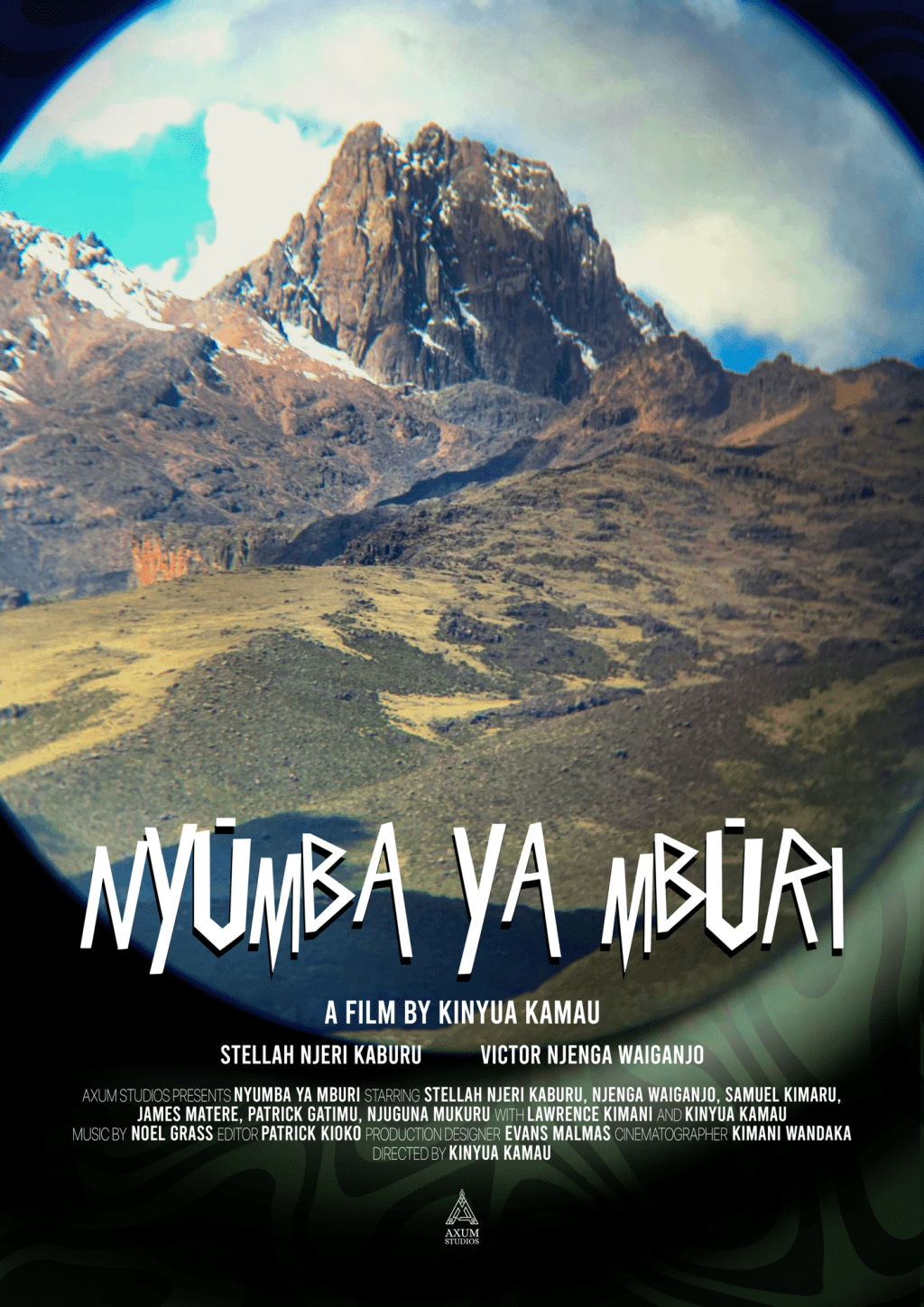
Nyumba ya Mburi (House of the Goat), directed by Kinyua Kamau, is a haunting exploration of Mount Kenya , it’s tradition, memory, and the obscured identity around it. Set against the rugged landscapes of rural Kenya, the film uses an experimental style to weave a complex tale that is as beautiful as it is bewildering. It’s a daring piece of cinema that demands patience and reflection from its viewers.
The film follows three hikers;Kinyua Kamau, Stella Njeri and her son Njenga. The titular “House of the Goat” represents a nexus of tradition but at the same time working as a symbol of mystery, hidden history and knowledge.As the film unfolds , the lines between reality, myth, and memory blur, creating a narrative that feels as much like a dream as a story. You know how dreams are hard to explain once you are up ?
The three explore hidden gems which are honestly really beautiful to look at. From Lake Ellis,Nithi waterfall, Kechi Tarn, Biliard Table, Roadhide campsite and the Nyumba ya Mburi caves. I truly appreciate Stella’s knowledge of the mountain. She is the director of Mara Expeditions and truly, this lady is a ‘mountain goat’. Her and Njenga share their extensive knowledge about the mountains with Kinyua.
Visually, Nyumba ya Mburi is solid but not extraordinary. It captures the essence of its setting well, but doesn’t push the boundaries of cinematic artistry. The director employs long, lingering shots that allow the scenes to breathe and immerse the audience in the environment. While this slow pacing creates a contemplative atmosphere, at times the extended duration of these shots can feel drawn out, testing the viewer’s patience and detracting from the overall narrative momentum. This technique immerses viewers in a world where clarity is elusive, much like the film’s central themes of uncertainty and introspection.
However, this experimental style may alienate some viewers. The lack of a clear narrative thread can make the film feel inaccessible at times, leaving audiences struggling to connect emotionally with the characters or their journey. Stella is undoubtedly an intriguing character, but sadly, none of the characters are deeply explored. Her potential for emotional depth is evident, yet the film misses an opportunity to fully develop her story. As a result, the audience is left with a sense of emotional distance, preventing a stronger connection to the characters and their journeys.
Nyumba ya Mburi is an ambitious film that won’t appeal to everyone. It’s less about telling a story and more about creating an experience—one that is rich in symbolism and cultural exploration. For viewers open to abstract and experimental cinema, it’s a rewarding exploration of Kenyan heritage and identity. However, for those who prefer a more traditional narrative, the film may feel like an enigma, leaving more questions than answers. I still strongly believe the film could have benefited from the services of a story consultant and a consulting video editor.
With its bold direction and striking visuals, Nyumba ya Mburi cements itself as a daring addition to Kenyan cinema, albeit one that requires effort and patience to fully appreciate.
Here’s a link to the trailer
https://youtu.be/R8Wq_oLlr3U?feature=shared
The film scores a 5 out of 10


Leave a comment