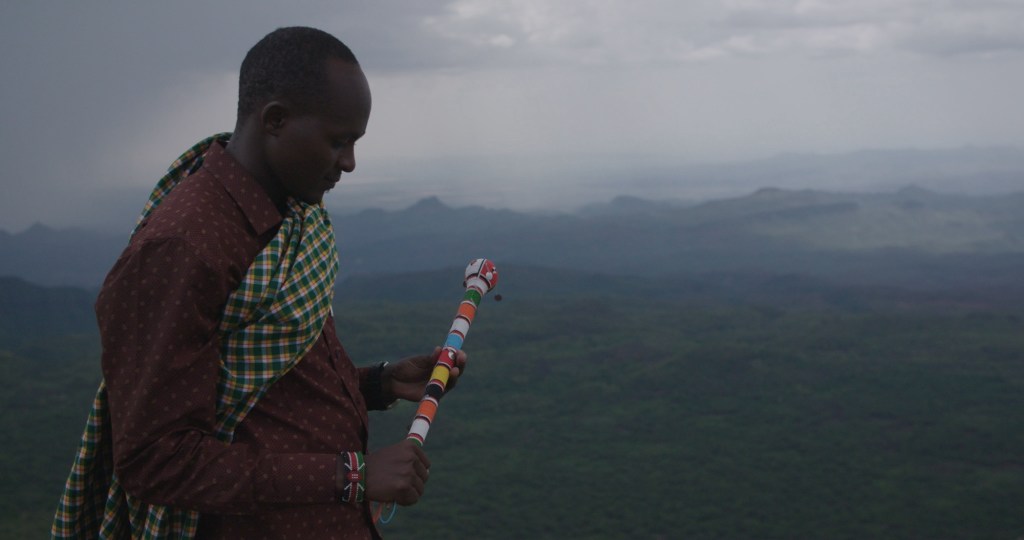
Have you ever walked out of a cinema so angry that you wanted to smack the next person to you mainly because the film evoked so much anger and emotions from you? I watched ‘the battle for Laikipia’ at the ongoing NBO film festival during its opening night on the 17th of October and I am almost 100 percent certain the 100 plus people who watched it on that night feel the same. At first glance and from sneak peeks and reviews I had seen prior to the film, I thought it was going to be a film about climate change. Well it actually is. However, I was not prepared for the drastic turn this film took. The first thing I said exiting the cinema hall was ‘ 56,000acres? madness!’
The Battle for Laikipia is a documentary set in the Laikipia plateau that focuses on the Samburu pastoralists who need to keep their cattle alive for their own survival and the white ranchers who want to protect their property. The changing climate in the region has intensified conflicts, revealing unresolved injustices that have persisted around for generations since colonial times. Filmed over a period of five years and edited for two years, the film takes an observational approach, allowing events to unfold naturally without imposing a specific narrative or viewpoint. It has won seven awards , including a producing prize awarded to Toni Kamau, the producer, at Sundance which is the largest independent film festival in the United States.
With over three hundred hours of footage, the final product, one hour and forty something minutes, is great. There is no room left for imagination. It is all there! The cinematography is amazing, it enhances the narrative without overshadowing it. Peter and Daphne direct the scenes really well and it is very easy to connect with the characters as it feels very authentic. You can tell there is little to no tampering with their way of life. This just shows how much time the filmmakers possibly spent with the characters in order to get comfortable around them and the cameras. Sam Soko and Jordan Inaan, the editors of the film ,do a skillful job, allowing the narrative to flow naturally without imposing any particular emotional direction on the audience.
The Samburu pastoralists have to keep on their side but because of the impending drought, they have to look for more pasture for their cattle, sheep and goats. These people depend on the cattle for food, for cultural significance, for livelihood, for social ties. It is all they know. In one scene in the film, the main character,Simeon from Samburu explains how their cattle directly affect their lives. When a child is born, they slaughter a cow, when one is married, they pay dowry via cattle, during the wedding, they slaughter a cow, when one dies, they are buried in skin hide. All aspects of their lives involves their cattle. So if you take that away, what is left of them?
On the other hand, we have the white British ranchers. They have lived in the ranches all their life. It is all they know. They have been born and raised in these ranches. Their great grandparents are buried in these lands. They care about the land, and the wild animals, and the peace that is brought about by little to no human interaction on the ranches and conservancies. They have electric fences in place to protect their property from invasion by the Samburu people who now are desperate to feed their cattle because the pasture on their side has dwindled.
The involvement of one arm of the government, the police, makes the situation pretty awful. It is clear which side they are on because they shoot the Samburu pastoralists’ cattle. The ranchers arm their guards with guns and patrol the perimeter fences. Guards who seem to be Samburu as well…Almost as if we are back to Lenana and the white man again. One rancher shoots pastoralists’ cattle as they graze on his side of the fence, in search of grass to eat. How the ranchers address the pastoralists with condescending tones, with curses and with racial undertones is truly disturbing. These scenes are just… heartbreaking.
The filmmakers Toni Kamau, Daphne Matziaraki and Peter Murimi managed to bring light to what is happening in Lakipia. As a Kenyan, everytime I have watched the news regarding Laikipia, all I have seen is bandits and armed pastoralists. It was a sad and shocking realization to understand exactly what is happening in that region. The media has sadly misrepresented what exactly happens there.Has the government failed the people of Samburu because why is it that their interaction with their government is violence? A government that they elected, a government that should care for its people and find stable solutions. The land system and its corrupt nature is very evident. What do you mean an individual owns 110,000 acres of land ? That is only in Laikipia. What about other areas like Karen, Naivasha and probably others that I do not know about? Both the ranchers and the pastoralists have inherited a grave problem. The sad part, it is not yet over. The climate change though affecting both of the two communities, has exposed a bigger problem which still persists because between you and I, we both know that the global climate change is not changing for the better. Most of us only think about climate change if it is too hot for us to be outside or too cold for us to be in the swimming pool. For the Laikipia people, it as serious as losing their lives and identity.
This film has shown a huge need for conversations with the samburu pastoralists, with the ranchers, with policy makers, with the government of Kenya. It left me thinking, are we really past the colonial times? Because it is clear as that the ghosts are still here with us. I truly applaud the filmmakers for bearing witness to what is happening in the region. Something should be done. Something should be done soon.
The film scores an 8.9 out of 10.


Leave a comment